
Wearable Sensing’s wireless DSI-24 is the leading dry electrode EEG system in terms of signal quality and comfort. The DSI-24 takes on average less than 3 minutes to set up, making it the ideal solution for scientists in need of a simple, easy to use, EEG system. Our patented sensor technology not only delivers uncompromised signal quality but also enables our system to be virtually immune against motion and electrical artifacts. As a result, the DSI-24 can be utilized in virtual or augmented reality, while also allowing researchers to take their experiments out of the lab, and into the real world.
The DSI-24 has sensors that provide full head coverage with 19 electrodes on the head, 2 earclip sensors, and also has 3 built-in auxiliary inputs for acquisition of up to 3 auxiliary sensors. It also has an 8-bit trigger input to synchronize with other devices such as Eye-Tracking, Motion (IMU), and more.
Used around the world by leaders in Research, Neurofeedback, Neuromarketing, Brain-Computer Interfaces, & Neuroergonomics.
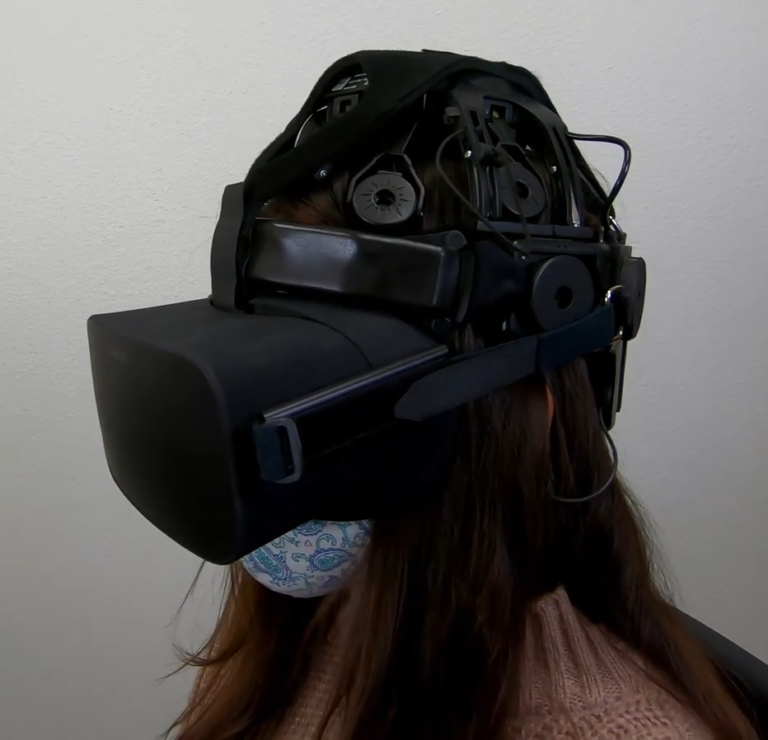
With over 90% correlation to research-grade wet EEG systems, the dry sensor interface (DSI) offers unparalleled quality and performance
Multiple adjustment points and a foam pad lined interior enable the system to be worn for up to 8 hours on any head shape or size
All DSI systems include free, unlimited licenses of DSI-Streamer, our data acquisition software which can record raw data, in .csv and .edf file formats
Faraday cage's, spring-loaded electrodes, and our patented common-mode follower technology, provides near immunity against electrical and motion artifacts
Using 70% isopropyl alcohol and a cleaning brush, the DSI-24 only takes a minute to clean, 3 minutes to dry, and can be up and running on the next subject in minutes
All DSI systems include our free C based .dll API, which enables users to pull the raw data directly from the headset, for custom software on Windows, Mac OS, Linux, and ARM
The DSI-24 was designed for ultra-rapid setup, taking on average less than 3 minutes to don, and works on any type of hair, including long hair, thick hair, afros, and more
DSI headsets have active sensors, amplifiers, digitizers, batteries, onboard storage, and wireless transmission, making them complete, mobile, wearable EEG systems
DSI systems exclusively work with QStates, a machine learning algorithm for cognitive classification on states such as mental workload, engagement, and fatigue
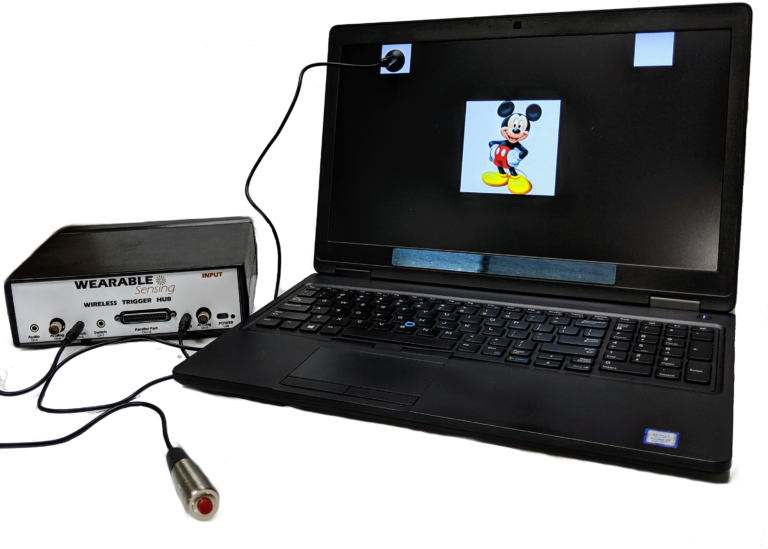
Our Wireless Trigger Hub simplifies the synchronization of DSI headsets with other devices. It features:
An additional benefit of the Trigger Hub design is that it allows synchronization across multiple data sources that are distributed across multiple systems, each of which running at its own clock rate. One such case commonly experienced in EEG experiments involves the synchronization of EEG and eye-tracking measurements, where the inevitable clock drift that arises between two systems during extended measurements creates difficulty in aligning data to events across the two systems.
The DSI-24 has 3 auxiliary inputs on the headset, which allows for automatic synchronization of Wearable Sensing’s auxiliary sensors to the EEG. The sensors available include ECG, EMG, EOG, GSR, RESP, & TEMP. The sensor data is collected and recorded in our data acquisition software, DSI-Streamer, where you can view the EEG and Aux sensors in real-time.
EEG Channels
Fp1, Fp2, Fz, F3, F4, F7, F8, Cz, C3, C4, T7/T3, T8/T4, Pz, P3, P4, P7/T5, P8/T6, O1, O2, A1, A2
Reference / Ground
Common Mode Follower / Fpz
Head Size Range
Adult Size: 52cm – 62cm circumference
Child Size: 48cm – 54cm circumference
Sampling Rate
300 Hz (600Hz upgrade available)
Bandwidth
0.003 – 150 Hz
A/D resolution
0.317 μV referred to input
Input Impedance (1Hz)
47 GΩ
CMRR
> 120 dB
Amplifier / Digitizer
16 bits / 24 channels
Wireless
Bluetooth
Wireless Range
10 m
Run-time
> 24 Hours, Hot-Swappable Batteries
Onboard Storage
~ 68 Hours (available option)
Data Acquisition
Real time, evoked potentials
Signal Quality Monitoring
Continuous impedance, Baseline offset, Noise (1-50 Hz)
Data Type
Raw and Filtered Data available
File Type
.CSV and .EDF
Data Output Streaming
TCP/IP socket, API (C Based), LSL
Cognitive State Classification
Brain Computer Interface
SSVEP BCI Algorithms; BCI2000; OpenViBE; PsychoPy; BCILab
Data Integration / Analysis
CAPTIV; Lab Streaming Layer; NeuroPype; BrainStorm; NeuroVIS
Neurofeedback
Applied Neuroscience NeuroGuide; Brainmaster Brain Avatar; EEGer
Neuromarketing
CAPTIV Neurolab
Presentation
Presentation; E-Prime
Ahmed, Mohammad H; Weerasinghe, Yasith; Grillo, Michael; Nielsen, Izabela Ewa; Taebi, Amirtaha; Thibbotuwawa, Amila; Kaya, Mehmet; Gamage, Peshala T
Does chronic occupational demand alter EEG stress biomarkers during cognitive challenge? a study of emergency physicians Journal Article
In: Cognitive Neurodynamics, vol. 20, no. 1, pp. 201, 2026.
@article{ahmed2026does,

title = {Does chronic occupational demand alter EEG stress biomarkers during cognitive challenge? a study of emergency physicians},

author = {Mohammad H Ahmed and Yasith Weerasinghe and Michael Grillo and Izabela Ewa Nielsen and Amirtaha Taebi and Amila Thibbotuwawa and Mehmet Kaya and Peshala T Gamage},

doi = {https://doi.org/10.1007/s11571-026-10571-8},

year  = {2026},

date = {2026-10-12},

urldate = {2026-01-01},

journal = {Cognitive Neurodynamics},

volume = {20},

number = {1},

pages = {201},

publisher = {Springer},

abstract = {Acute cognitive challenge produces consistent changes in several EEG indices, including alpha-band desynchronization, frontocentral theta enhancement, beta-band activity, and the theta/beta ratio. These measures serve as common biomarkers of cognitive workload and stress. It is not yet clear whether chronic occupational exposure to high cognitive demand alters these responses. Emergency physicians offer a useful test case, since their work involves repeated cognitive control under time pressure and high-stakes decision-making. We recorded 19-channel electroencephalography from 17 board-certified emergency physicians and 18 non-healthcare comparison participants during eyes-open rest and a standardized composite challenge combining Stroop interference, serial subtraction, time pressure, and evaluative feedback. Spectral power was estimated with Welch’s method, log-transformed, and analyzed using a hierarchical framework combining six a priori regional features with electrode-wise topographic mapping. Across groups, the challenge produced robust frontal and posterior alpha suppression and increased frontocentral theta, consistent with workload-related cortical engagement. No Group x Condition interaction survived false discovery rate correction for the regional features, and no exploratory electrode-wise interaction survived correction across the full feature set. A complementary Bayesian analysis yielded moderate evidence for the null for the alpha and theta features, but inconclusive evidence for the beta and theta/beta features. Sub-band decomposition showed the challenge-related beta increase was specific to high beta (20–30 Hz), while low and mid beta decreased in emergency physicians. These results indicate an absence of detectable large group differences in EEG stress biomarkers following prolonged occupational exposure to high cognitive demand, although the sample constrains this conclusion to large effects.


},

keywords = {},

pubstate = {published},

tppubtype = {article}

}
Cheng, Chia-Hsiung; Lu, Hsinjie
In: Brain Sciences, vol. 16, no. 9, pp. 976, 2026.
@article{cheng2026resting,

title = {Resting-State 40 Hz EEG Activity Before and After Single-Session Non-Flickering 40 Hz Light Stimulation in Cognitively Normal Older Adults: An Uncontrolled Pilot Study},

author = {Chia-Hsiung Cheng and Hsinjie Lu},

doi = {https://doi.org/10.3390/brainsci16090976},

year  = {2026},

date = {2026-09-15},

urldate = {2026-01-01},

journal = {Brain Sciences},

volume = {16},

number = {9},

pages = {976},

publisher = {MDPI},

abstract = {Background: Forty-hertz sensory stimulation has emerged as a potential approach for modulating neural activity relevant to Alzheimer’s disease. However, electrophysiological changes following non-flickering 40 Hz light stimulation in older adults remain unclear. This study investigated whether a single-session intervention of non-flickering 40 Hz light stimulation would be associated with increased resting-state 40 Hz oscillations in cognitively normal older adults. Methods: In this uncontrolled single-arm pilot study, 16 cognitively normal older adults underwent a 60 min session of non-flickering 40 Hz light stimulation. Resting-state EEG was recorded immediately before and after stimulation. Relative power within 38–42 Hz was analyzed across six predefined scalp regions and the whole-brain measure using one-tailed Wilcoxon signed-rank tests with Benjamini–Hochberg false discovery rate (FDR) correction. Exploratory real-time EEG recordings during stimulation were available in 10 participants. Results: After FDR correction, resting-state 38–42 Hz relative power was higher post-stimulation in the central (FDR = 0.045, effect size = 0.555) and right temporal (FDR = 0.014, effect size = 0.724) regions. In the absolute-power sensitivity analysis, only the right temporal increase remained significant after FDR correction (FDR = 0.042). Exploratory during-stimulation analysis showed a nominally increased 38–42 Hz signal-to-noise ratio in the right temporal region (p = 0.026). One participant reported very mild fatigue; no other adverse responses were reported. Conclusions: This pilot study suggests regional increases in resting-state 38–42 Hz activity after non-flickering 40 Hz light stimulation, with additional absolute-power support for the right temporal finding. These findings remain preliminary given the uncontrolled design and small sample.},

keywords = {},

pubstate = {published},

tppubtype = {article}

}
Hsu, Tien-Wei; Lin, Ching-Hung; Kato, Takahiro A; Tateno, Masaru; Yen, Ju-Yu; Hung, Chih-Hsing; Ko, Chih-Hung
Hikikomori symptoms, depressive symptoms, and frontal beta activity in young adult males with gaming disorder Journal Article
In: Psychiatry Research, pp. 117454, 2026.
@article{hsu2026hikikomori,

title = {Hikikomori symptoms, depressive symptoms, and frontal beta activity in young adult males with gaming disorder},

author = {Tien-Wei Hsu and Ching-Hung Lin and Takahiro A Kato and Masaru Tateno and Ju-Yu Yen and Chih-Hsing Hung and Chih-Hung Ko},

doi = {https://doi.org/10.1016/j.psychres.2026.117454},

year  = {2026},

date = {2026-09-07},

urldate = {2026-01-01},

journal = {Psychiatry Research},

pages = {117454},

publisher = {Elsevier},

abstract = {Gaming disorder (GD) is a clinically heterogeneous condition that frequently co-occurs with hikikomori symptoms, depressive symptoms, and reduced resilience. The interrelationships between psychological characteristics and resting-state electroencephalography (EEG) features were investigated. In this cross-sectional study, 59 males with GD and corresponding age-matched healthy controls were recruited. The diagnoses were made through face-to-face psychiatric interviews. The participants completed the Hikikomori Questionnaire-25 (HQ-25), Center for Epidemiologic Studies Depression Scale, and 14-Item Resilience Scale. Resting-state EEG (eyes closed) was recorded for 5 min. In the GD group, subgroup analyses were performed according to high (≧42-points) and low (<42-points) HQ-25 symptom levels. Group comparisons, hierarchical logistic regressions, and correlation analyses were performed. In the hierarchical logistic regression analysis, depressive and total hikikomori symptoms were independently associated with GD, whereas resilience was not. When HQ-25 was decomposed into subscales, only the physical isolation subscale was independently associated with GD. In the GD group, participants with high hikikomori symptoms were more depressed and had lower resilience than those with low hikikomori symptoms. No significant differences in resting EEG were observed between the GD and control groups. Within the GD group, the high-hikikomori subgroup showed nominally higher frontal beta activity at Fz, F3, and F4; however, these differences were attenuated and no longer statistically significant after adjustment for depressive symptoms. Frontal beta power was positively correlated with depressive symptoms and hikikomori severity, whereas F4 beta power was associated with clinical severity. These findings suggest that depressive symptoms and isolation-related social withdrawal are important clinical dimensions in GD, while frontal beta activity may reflect overlapping depressive and social withdrawal-related burden rather than a hikikomori-specific biomarker.

},

keywords = {},

pubstate = {published},

tppubtype = {article}

}
Kim, Heegyu; Jeon, Gyewon; Lee, Sangwon; Jun, Sung Chan; Jung, Jae-Yoon; Nam, Chang S
The dynamics of beliefs in social decision-making: insights from intra-and inter-brain neural networks Journal Article
In: Scientific Reports, 2026.
@article{kim2026dynamics,

title = {The dynamics of beliefs in social decision-making: insights from intra-and inter-brain neural networks},

author = {Heegyu Kim and Gyewon Jeon and Sangwon Lee and Sung Chan Jun and Jae-Yoon Jung and Chang S Nam},

doi = {https://doi.org/10.1038/s41598-026-58455-5},

year  = {2026},

date = {2026-08-21},

urldate = {2026-01-01},

journal = {Scientific Reports},

publisher = {Nature Publishing Group UK London},

abstract = {Social beliefs are internalized expectations about others’ behaviors and intentions within social systems, shaping how individuals interpret, predict, and respond to interpersonal events. This study aims to examine how the dynamics of social beliefs influence neural activity and inter-brain synchrony within group interactions. To quantitatively assess relational changes, we implemented an iterated 3-player Prisoner’s Dilemma game paradigm, allowing for the observation of group-level behavioral patterns across repeated cooperation and defection scenarios. Participants were repeatedly exposed to cooperative and non-cooperative interactions, during which we observed neurophysiological responses associated with beliefs formation and change. Event-Related Potential analysis was used to assess individual cognitive responses to beliefs shifts, with P300 and N100 components reflecting sensitivity to social feedback. Additionally, intra-brain network analysis revealed changes centered around the parietal region, indicating altered social relationship representations at the individual level. At the group level, inter-brain synchrony significantly declined following beliefs changes, reflecting a disruption in shared intentionality and coordination. These findings suggest that violations of social expectations may induce cognitive instability and reduce neural synchrony in group decision-making contexts, offering new insights into the neural mechanisms underlying dynamic social cognition.


},

keywords = {},

pubstate = {published},

tppubtype = {article}

}
Marquardt, Ingo; Alchanat, Anthilia; Jain, Priyanka
Decoding silent reading from non-invasive EEG Technical Report
2026.
@techreport{marquardt2026decoding,

title = {Decoding silent reading from non-invasive EEG},

author = {Ingo Marquardt and Anthilia Alchanat and Priyanka Jain},

doi = {https://doi.org/10.48550/arXiv.2608.20186},

year  = {2026},

date = {2026-08-20},

urldate = {2026-01-01},

journal = {arXiv preprint},

abstract = {Non-invasive decoding of inner speech faces a fundamental data problem: a corpus pairing brain activity with a person's spontaneous inner monologue cannot be collected, and the available proxy paradigms (cued repetitive and retrospectively reported generative inner speech) are slow to acquire, poorly time-locked, and subject compliance is unverifiable. We therefore treat silent reading as a scalable proxy task and ask how much lexical and semantic information a contrastive decoder can extract from it. We report an open-vocabulary analysis of approximately 240,000 word presentations recorded from a single densely-sampled participant across 393 runs (ca. 49 h) of 19-channel dry-electrode EEG. Words from continuous narrative text were presented in rapid serial visual presentation, with typography randomised on every trial to partially decorrelate word identity from low-level visual form. A convolutional EEG encoder, optionally followed by a causal transformer, was trained with a CLIP-style contrastive objective to align short EEG windows with hidden-state embeddings of the presented word taken from a large language model. Decoding, evaluated as word-grouped top-10 retrieval against permutation baselines, was reliably above chance, extended to mid-frequency and rare words, and scaled log-linearly with training-data volume with no sign of saturation. Removing occipital and posterior-temporal electrodes reduced the word-level gain by roughly one third but left context tracking unchanged. Control analyses separate word-level decoding from narrative context tracking and from a non-neural positional prior introduced by the transformer's positional embedding. These results establish that open-vocabulary word-level information is recoverable from EEG during silent reading, and that decoding is data-limited rather than saturated.

},

keywords = {},

pubstate = {published},

tppubtype = {techreport}

}
Li, Ming; Pan, Junjun; Ju, Dai; Wu, Wanqing; Hao, Aimin; Liu, Yong-Jin; Gao, Yang
STMAE-Few: A Spatial-Temporal Masked Autoencoder for Few-channel EEG-based Emotion Recognition Journal Article
In: IEEE Transactions on Affective Computing, 2026.
@article{li2026stmae,

title = {STMAE-Few: A Spatial-Temporal Masked Autoencoder for Few-channel EEG-based Emotion Recognition},

author = {Ming Li and Junjun Pan and Dai Ju and Wanqing Wu and Aimin Hao and Yong-Jin Liu and Yang Gao},

doi = {https://doi.org/10.1109/TAFFC.2026.3719828},

year  = {2026},

date = {2026-08-04},

urldate = {2026-01-01},

journal = {IEEE Transactions on Affective Computing},

publisher = {IEEE},

abstract = {Conventional EEG-based supervised emotion recognition typically requires large manually annotated multi-channel EEG data. The susceptibility of EEG to noise can lead to corruption of certain channels, making it challenging for emotion recognition from few available channels (denoted as few-channel in this paper). Masked Autoencoder (MAE) can learn highly generalizable representations by reconstructing the original signals from the visible subset of channels. However, most studies do not consider temporal masking, and random spatial masking overlooks the brain's inherent structure, impeding reconstruction efficacy. In this paper, we propose a novel pre-training framework, STMAE-Few, based on a spatial-temporal masked autoencoder, which introduces spatial-temporal masking strategies at both the EEG channel and frame levels to extract robust feature representations and enhance the performance of few-channel emotion recognition in real-world scenarios. Inspired by neuroscience, our approach integrates region and region-selection spatial masking strategies and introduces true position encoding during pre-training to capture richer spatial information. Extensive experimental results on SEED, SEED-IV, and SEED-V datasets demonstrate that our pre-training framework can effectively capture the temporal dynamics and spatial correlations within and between different brain regions.

},

keywords = {},

pubstate = {published},

tppubtype = {article}

}
Celik, Basak; Huang, Catherine; Madison, Cindee; Mathan, Santosh; Gipson, Bryant; Smart, Andrew J; Erdogmus, Deniz
RSVP-induced ERP Class Posteriors Reflect Graded Neural Perception of Humanoid Images Conference
9th Annual Conference on Cognitive Computational Neuroscience, 2026.
@conference{celikrsvp,

title = {RSVP-induced ERP Class Posteriors Reflect Graded Neural Perception of Humanoid Images},

author = {Basak Celik and Catherine Huang and Cindee Madison and Santosh Mathan and Bryant Gipson and Andrew J Smart and Deniz Erdogmus},

url = {https://openreview.net/forum?id=qvzdqR9sYX},

year  = {2026},

date = {2026-07-31},

booktitle = {9th Annual Conference on Cognitive Computational Neuroscience},

abstract = {In the rapid serial visual presentation (RSVP) paradigm, EEG event-related potentials (ERPs) are captured when a target stimulus appears in the stimulus sequence. In the context of detecting target objects (e.g. humans) in images, it is uncertain whether an ERP will manifest in EEG readings when a sequence includes a small ratio of pseudotargets (e.g. non-human but human-shaped humanoids) interspersed with actual human targets. We studied this question through a binary EEG classification model that yields target perception scores for human presence in images. This model produces a value in [0,1] depending on image content, from EEG time-locked to image onset in RSVP. The model was calibrated using a set of EEG responses to a combination of distractor (nontarget) and target images shown to multiple subjects within the RSVP paradigm. Target class posterior given EEG temporally aligned to image onset was used as a target perception score. Analyses on test imagery demonstrated that, as anticipated, distractor images result in EEG signals that tend to receive lower target perception scores than that of target images. More interestingly, pseudotarget (humanoid) test images that were intentionally designed to induce confusion received slightly lower target perception scores than target images. While the analyses and observations are based on data from limited number of subjects and trials, the results are promising as they indicate degraded target recognition response to humanoid images in contrast to genuine targets.


},

keywords = {},

pubstate = {published},

tppubtype = {conference}

}
Matavalam, Chandu Priya; Gangadharan, Sagila; Vinod, AP
Consumer Trait Prediction from EEG Using a Novel SpectralTraitNet for Neuromarketing Application Conference
2026 IEEE International Conference on Human-Machine Systems (ICHMS), IEEE 2026.
@conference{matavalam2026consumer,

title = {Consumer Trait Prediction from EEG Using a Novel SpectralTraitNet for Neuromarketing Application},

author = {Chandu Priya Matavalam and Sagila Gangadharan and AP Vinod},

doi = {https://doi.org/10.1109/ICHMS69701.2026.11602183},

year  = {2026},

date = {2026-07-15},

urldate = {2026-01-01},

booktitle = {2026 IEEE International Conference on Human-Machine Systems (ICHMS)},

pages = {416–421},

organization = {IEEE},

abstract = {Decoding stable consumer traits from Electroencephalography (EEG) remains a largely unexplored frontier in neuromarketing, which has traditionally focused on short-term preference classification (e.g., “Like” vs. “Dislike”). Moving beyond transient reactions to identifying long-term profiles, such as the “Bargain Hunter”- a consumer predominantly motivated by finding the best deals and discounts to make purchase decisions, enables marketers to target promotions more effectively to drive conversions. However, consumer trait prediction is challenging due to the subtle nature of trait-based neural signatures, intra-subject label homogeneity, and significant inter-subject variability. Unlike conscious preference tasks, consumer traits function as subconscious priors, resulting in a high risk of the model overfitting to individual identities rather than generalized traits. In this study, we propose a subject-independent deep learning framework to classify “Bargain Hunter” vs. “Non-Bargain Hunter” traits using EEG signals recorded during product browsing. A hybrid lightweight Convolutional Neural Network derived by combining EEGNet and MobileNet, called SpectralTraitNet, which uses depthwise separable convolutions and attention mechanism, is proposed to extract discriminative spatial-spectral features. To enhance cross-subject generalization, Euclidean Alignment is employed to align subject-specific covariance matrices into a common manifold, effectively addressing domain shifts. The framework is evaluated on the publicly available NeuMa dataset (N=42), and a subject-level classification accuracy of 6 4. 2 9±1 8 % is achieved using rigorous 6 -fold stratified cross-validation. These results demonstrate that manifold alignment and data augmentation are critical for extracting generalized features across unseen subjects, offering a pathway towards more personalized, neurologically informed pricing and marketing strategies.},

keywords = {},

pubstate = {published},

tppubtype = {conference}

}
Kim, H; Jun, SC; Nam, CS
A reproducible EEG hyperscanning dataset for triadic social decision-making during an iterated 3-player Prisoner’s Dilemma Journal Article
In: Data in Brief, pp. 113064, 2026.
@article{kim2026reproducible,

title = {A reproducible EEG hyperscanning dataset for triadic social decision-making during an iterated 3-player Prisoner’s Dilemma},

author = {H Kim and SC Jun and CS Nam},

doi = {https://doi.org/10.1016/j.dib.2026.113064},

year  = {2026},

date = {2026-07-10},

urldate = {2026-01-01},

journal = {Data in Brief},

pages = {113064},

publisher = {Elsevier},

abstract = {This data article describes an open EEG hyperscanning dataset acquired during an iterated 3-player Prisoner’s Dilemma (PD) task, designed to support reproducible research on triadic social decision-making. EEG was recorded simultaneously from three participants per group (11 groups; 33 subjects) using synchronized acquisition, with decision-locked and feedback-locked epochs provided for 40 task trials per subject and three 60-s resting-state runs per group. The released MATLAB files contain stacked 57-channel EEG arrays (19 channels × 3 subjects) sampled at 300 Hz, with explicit epoch definitions for decision (−1000 to 4000 ms) and feedback (−1000 to 2000 ms) periods, as well as trial-wise behavioral choice labels (1=cooperate, 2=defect) enabling reconstruction of dyad- and triad-level outcomes. Questionnaire metadata (personal information and pre/mid/post state measures) Yare also provided as supplementary spreadsheets. To facilitate reuse and benchmarking, we release Python code that reproduces the preprocessing pipeline (average reference, FIR filtering, ICA + ICLabel for task EEG), ERP summaries, and inter-brain synchrony measures (PLV and coherence) with window-matched resting baselines and cluster-permutation statistics. The dataset is intended for method development and benchmarking in ERP analysis, inter-brain synchrony estimation, and modeling of dynamic group interaction states in triadic games.},

keywords = {},

pubstate = {published},

tppubtype = {article}

}
Debnath, Shubham; Fylaktou, Fylaktis; Gurfein, Blake T; Zanos, Theodoros P
Autonomic and neural responses to varying transcutaneous cervical electrical stimulation parameters Journal Article
In: Bioelectronic Medicine, vol. 12, no. 1, pp. 16, 2026.
@article{debnath2026autonomic,

title = {Autonomic and neural responses to varying transcutaneous cervical electrical stimulation parameters},

author = {Shubham Debnath and Fylaktis Fylaktou and Blake T Gurfein and Theodoros P Zanos},

doi = {https://doi.org/10.1186/s42234-026-00210-2},

year  = {2026},

date = {2026-07-06},

urldate = {2026-07-06},

journal = {Bioelectronic Medicine},

volume = {12},

number = {1},

pages = {16},

publisher = {Springer},

abstract = {Background

Transcutaneous cervical electrical stimulation (TCES) offers a noninvasive approach to modulate the autonomic nervous system (ANS), but optimal stimulation parameters remain undefined. This pilot study aimed to identify optimal TCES parameters by evaluating autonomic and neural responses across varying frequencies, current intensities, electrode montages, and durations, using heart rate variability (HRV) and electroencephalography (EEG) alpha-band power as biomarkers of parasympathetic activity.


Methods

Twenty healthy adults completed four testing sessions, each examining one stimulation parameter. Autonomic data were collected including electrocardiography, non-invasive blood pressure, pupillometry, photoplethysmography, and dry-electrode EEG. Four frequencies (10, 25, 40, 150 Hz), three current intensities (sub-sensation threshold, sensation threshold, supra-sensation threshold), three electrode montages (bilateral, left-only, right-only), and two durations (4, 20 min) were tested. Root mean square of successive differences (RMSSD) and global EEG alpha-band power were primary outcomes. Parameters were sequentially optimized across visits based on individual RMSSD responses.


Results

No single frequency produced a significantly higher RMSSD or alpha-band power response. However, each participant exhibited a personalized preferred frequency yielding a mean 41% RMSSD increase in visit 1. This individualized frequency was selected for further visits varying current intensity and electrode montage. Supra-sensation threshold intensity was most effective, with 60% of participants responding strongest at this level. Left-sided stimulation resulted in a decrease in both RMSSD and alpha-band power, while right-sided and bilateral montages resulted in similar increases for these biomarkers. Due to decreasing cardiac vagal response in successive sessions, the preferred frequency was reevaluated before testing duration. The mean RMSSD response increased 54% upon recalibration in visit 4, though the preferred frequency shifted in 75% of participants. Autonomic vitals did not significantly modulate more with longer stimulation duration; pulse rate variability during 20-min stimulation revealed oscillatory autonomic dynamics with peak parasympathetic responses emerging around 4 min.


Conclusions

TCES can modulate cardiac vagal and cortical responses as measured by RMSSD and EEG alpha-band power, respectively, and a personalized, biomarker-guided approach to TCES parameter optimization is essential for future clinical applications targeting autonomic dysfunction.},

keywords = {},

pubstate = {published},

tppubtype = {article}

}

Please fill out the form and provide a brief description of your application so we can help match you with products that will meet your specific needs.